Stop 6 of 10
Hair Transplant Timeline, Month by Month
Published Jul 19, 2026Sources re-read Sep 22, 2026
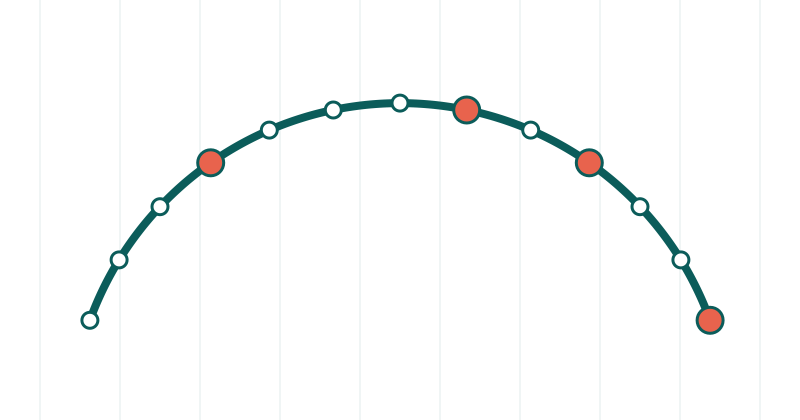
A hair transplant timeline has two clocks. The scalp heals within about two weeks, while the hair itself usually takes six to nine months to show results, and up to 12 months for some people, according to the American Academy of Dermatology (AAD).
In between sits a stage that catches almost everyone off guard: the transplanted hairs fall out. This guide goes through the timeline in order so each stage makes sense when it arrives. Individual timelines vary, and your own surgeon's aftercare instructions come first. For the procedure itself, see our main guide to how a hair transplant works and who it suits.
- Day 0Surgery: four to eight hours, scalp numbedAAD
- Days 1–2Dressing off; gentle washing can beginASPS
- Weeks 1–2FUE scabs clear; strip stitches out at 7–10 daysISHRS · ASPS
- Weeks 2–8Transplanted hairs shed: expectedAAD
- Month 3May look thinner than before surgeryAAD
- Months 6–9Most people see resultsAAD
- Month 12+Some take a year or moreAAD · ISHRS
Typical stages as published by the American Academy of Dermatology (AAD), American Society of Plastic Surgeons (ASPS) and ISHRS. Your surgeon's timeline comes first.
The day of surgery
The operation itself is long. The AAD says a transplant takes between four and eight hours, with most people awake and the scalp numbed.
You go home the same day in most cases, with written aftercare instructions. The grafts are fragile at this point: they sit in tiny incisions and are held mainly by the healing process that starts straight away. Clinics usually give specific guidance about sleeping position, touching the area and when to wash; follow it exactly.
Days one to three
The first days are about protecting the grafts and letting swelling settle. The American Society of Plastic Surgeons (ASPS) says bandages, if used, usually come off a day later, and that the hair can be washed gently within two days.
Soreness, tightness and swelling are common. Swelling of the forehead is among the complications a 2025 review of the medical literature lists, and it usually settles. Your clinic will say how to manage discomfort; the ASPS notes that aching and throbbing can be controlled with pain medication prescribed by your physician.
Days four to fourteen
In the second week, the small wounds seal and scabs form and fall away. The International Society of Hair Restoration Surgery (ISHRS) says the tiny scabs of FUE usually clear in about one to two weeks.
If you had strip harvesting, the ASPS says stitches come out in a week to 10 days. Many people feel ready to return to work and light activity after several days, though visible redness and a shaved donor area can affect when you feel comfortable being seen. The ASPS advises avoiding vigorous exercise and contact sports for at least three weeks.
Weeks two to eight: the shedding stage
Between two and eight weeks after surgery, the transplanted hairs usually fall out. The AAD calls this normal. The hair shaft sheds, but the follicle stays in the scalp, rests, and starts a new growth cycle.
This is the stage people most often mistake for failure. Seeing short hairs come away on a pillow or in the shower a few weeks after surgery is expected. Some people also notice existing hair around the transplanted area shedding at this point, which is called shock loss and is covered in our guide to shock loss after a hair transplant.
Month three: the thin stage
Around the third month, the transplanted area can look thinner than it did before surgery. The AAD says that by the third month the hair may look thinner than before.
This is often the hardest point emotionally. The transplanted hairs have shed, new growth has barely started, and any shock loss has not yet recovered. Knowing that this is part of the normal sequence makes it easier to wait it out. If you are worried, your clinic should be willing to see you or review photos.
Months four to six: early growth
New hairs usually begin to appear in the months after the shedding stage. The ASPS says it takes another five to six weeks after the hair falls out for growth to resume, and that hair then grows about half an inch a month. The ISHRS gives a similar figure of about 1 cm a month.
Early hairs are often fine and uneven. They thicken and lengthen over the following months, which is why judging a transplant at four or five months is premature.
Months six to nine: results emerge
Most people can see how their transplant is turning out somewhere in this window. The AAD says most patients see results between six and nine months after surgery.
Density keeps building during these months as more follicles enter active growth and the hairs thicken. Crown transplants, where the hair grows in a spiral and is viewed from above, often seem to mature more slowly than the front; our guide to crown hair transplants explains why.
Month twelve and beyond
For some people, the result takes 12 months to show, according to the AAD, and the ISHRS says full results often take a year or more. Hair texture can continue to change after that point.
Twelve months is also a sensible point for a review with your surgeon. It is a natural moment to judge the outcome, discuss whether any area would benefit from more work, and talk about the native hair that was not transplanted.
When the timeline isn't normal
Some things are not part of a normal recovery and need a call to your clinic the same day. These include spreading redness, increasing pain, pus, fever, or bleeding that does not stop with gentle pressure.
Poor growth that is still poor well after a year, patchy areas, or a donor area that looks thin are also worth raising, though they are not emergencies. Our guide to hair transplant side effects and when to call the clinic sets out the warning signs in more detail.
Keeping a record as you go
A simple photo diary makes the whole timeline easier to live through. Hair changes slowly, and memory is a poor judge of slow change.
Take photos of the front, top, crown and donor area in the same place, in the same light, at roughly the same distance, once a month. Note any shedding, itching or redness alongside the date. If you ever need to raise a concern, a dated series tells your surgeon far more than a single worried photo. It also shows you, on the difficult days around the third month, how far you have already come.
Time off and daily life
How much time you take away from work and social life is mostly a question of visibility rather than health. The ASPS says many people feel well enough to return to work and light activity after several days.
What varies is how comfortable you are being seen. Redness in the recipient area, a shaved donor area after FUE, and scabs in the first fortnight are all visible. People who can work from home, or who wear their hair longer and had strip harvesting, often return sooner. Ask your clinic about hats and head coverings early on, as advice differs on when a loose covering is safe to wear over new grafts.